
URINARY HEALTH

Nettle Leaf for Urinary Health Support

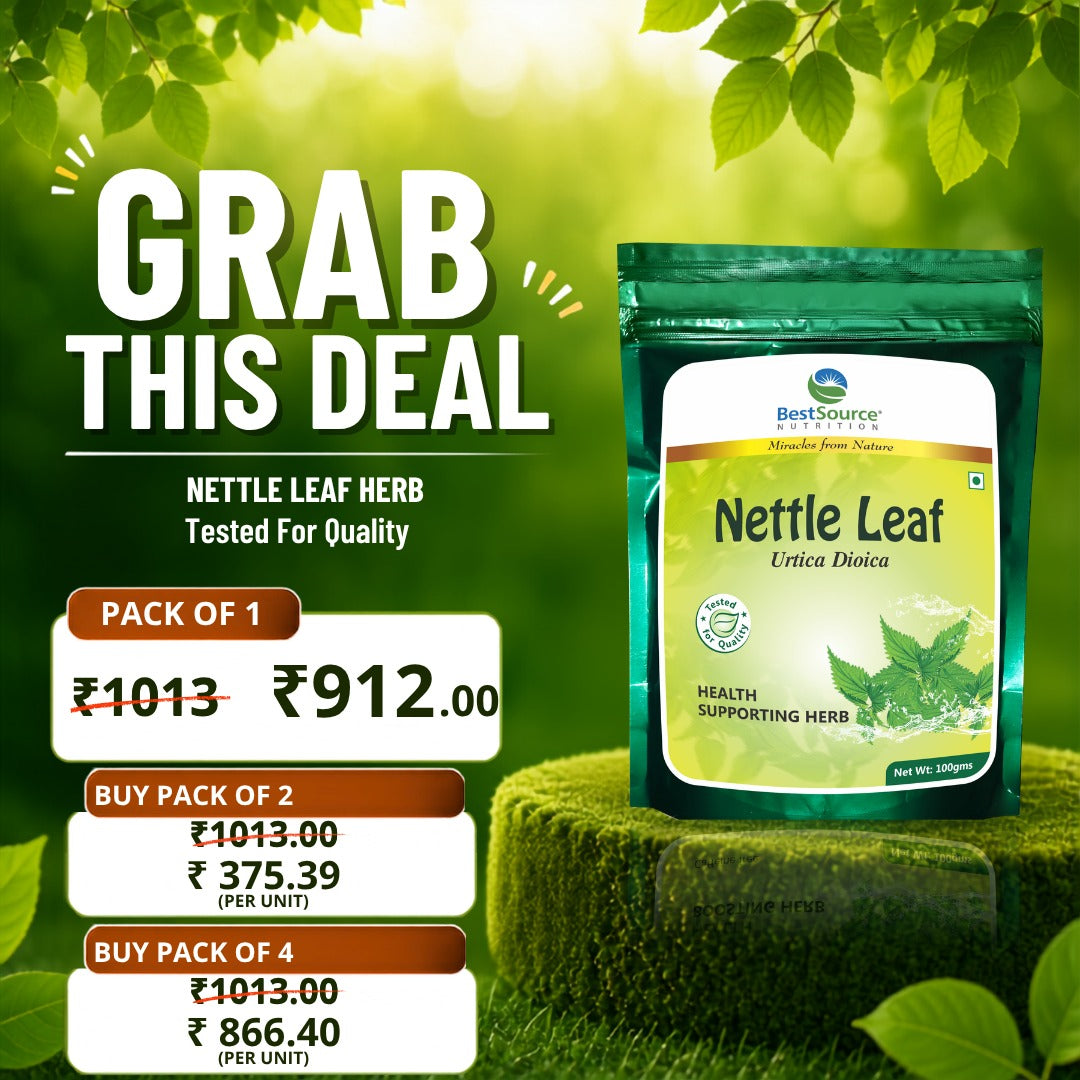
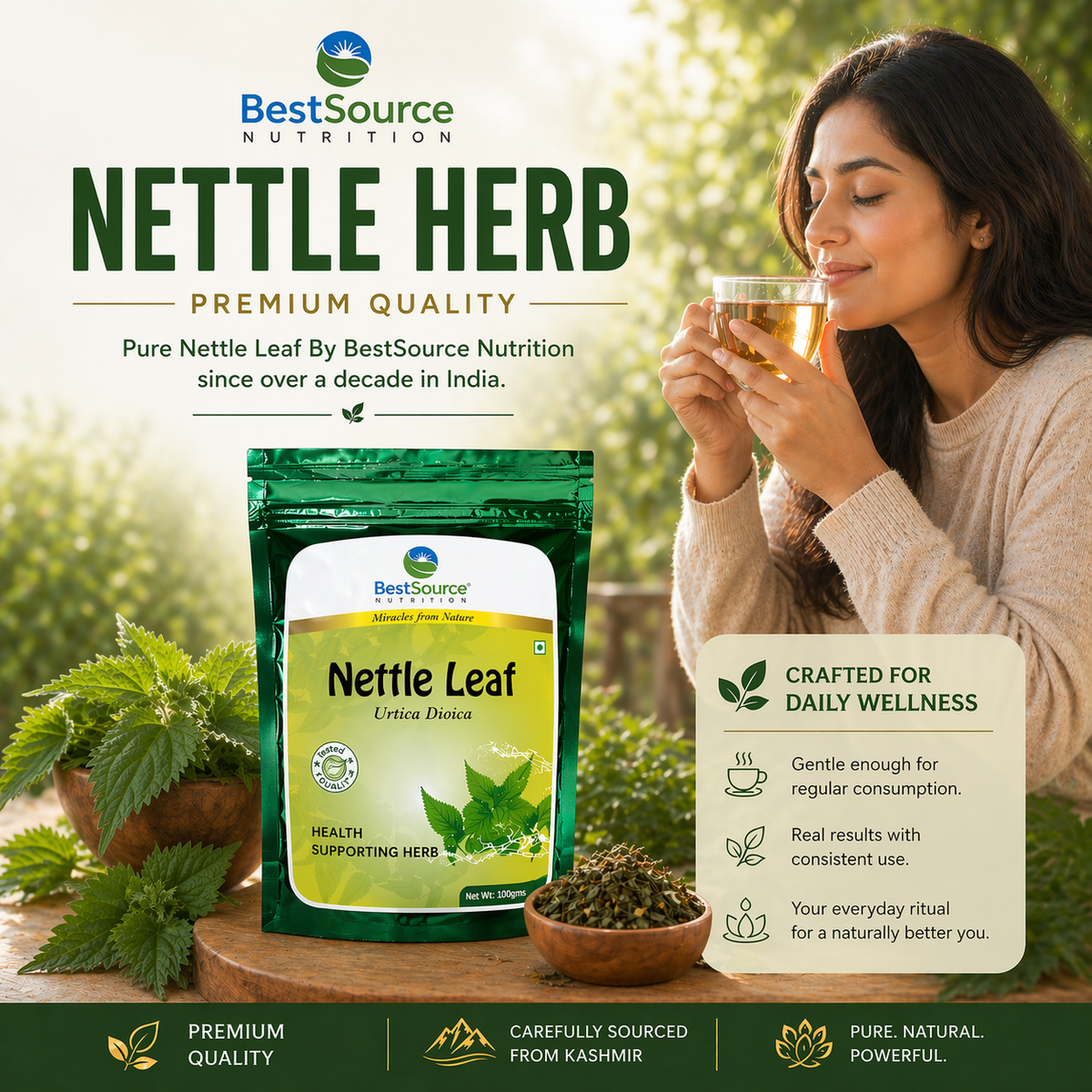
Nettle Leaf | Urtica dioica | 100 g Dried Leaves

A premium whole-leaf Nettle Leaf (Urtica dioica) infusion for adults seeking daily urinary wellness support and a naturally caffeine-free herbal ritual.
  • Whole Dried Nettle Leaves—Not Powder or Tea Bags
  • Approximately 66 Cups from One 100 g Pouch
  • Cultivated in Kashmir’s Himalayan Agro-Climatic Region
  • Hand-Picked, Caffeine-Free and Tested for Heavy Metals
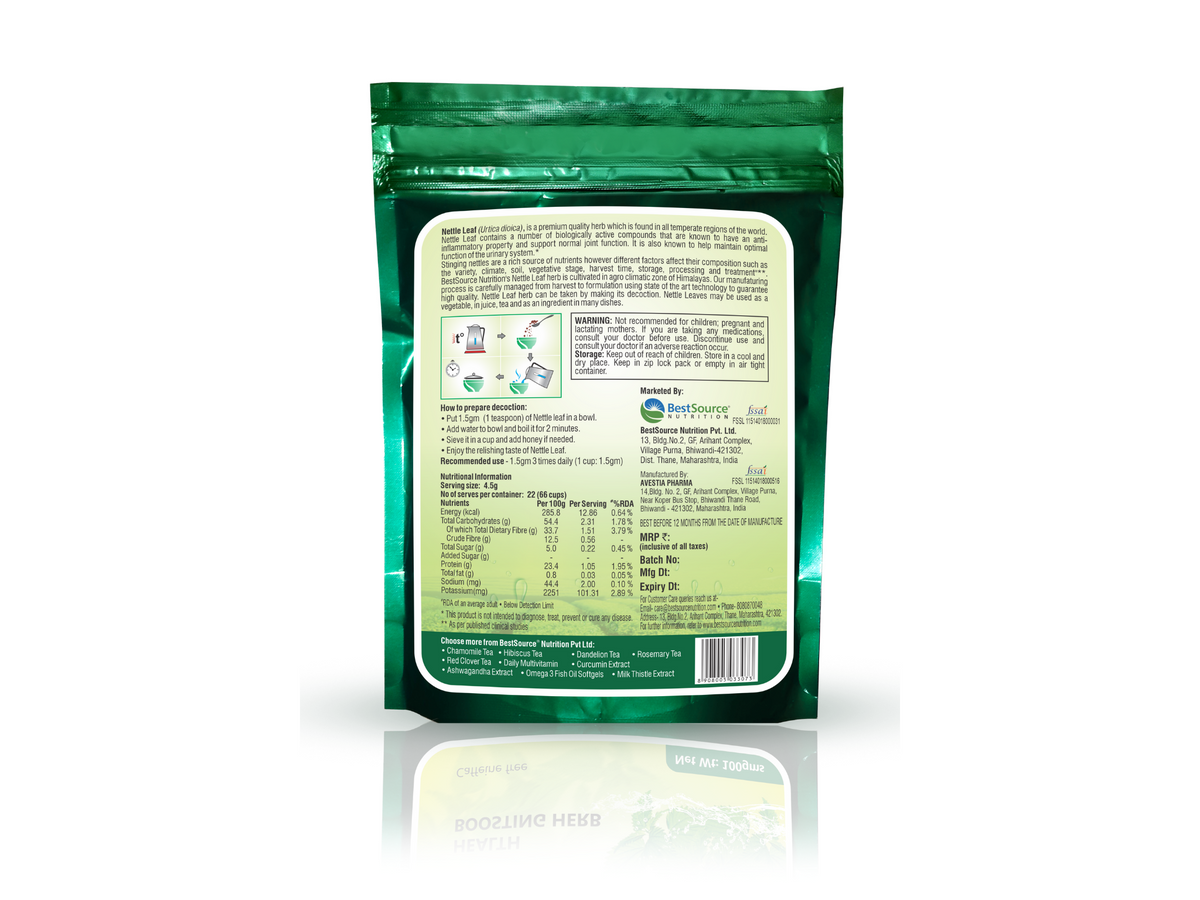
Batch No. NH100826
Mfg. Date 21 Aug 2026
Herbal Infusion
Whole Dried Leaves
Vegetarian
Approx. 66 Cups
₹912.00 ₹1,013.00Save 9%

Inclusive of all taxes

Secure Payments
100% Genuine Products
Free Shipping on Prepaid
Lab Tested
Kashmir-Cultivated
Hand-Harvested
Heavy-Metal Tested
Naturally Caffeine-Free
Quality Lab Test Report Available for every batch Download Report 1 → Download Report 2 →
At a Glance
Product Category Herbal Infusion
Form Whole Dried Leaves
Key Nutrients Urtica dioica Leaf
Suitable For Adults
Diet Type Vegetarian / Plant-Based
Caffeine Status Naturally caffeine-free
Taste / Aroma "Taste: Mild, earthy and slightly vegetal
Aroma: Fresh, green and herbaceous"
Net Weight 100 g
Plant Part Dried leaves
Botanical Name Urtica dioica
Why Nettle Leaf for Urinary Health Support?

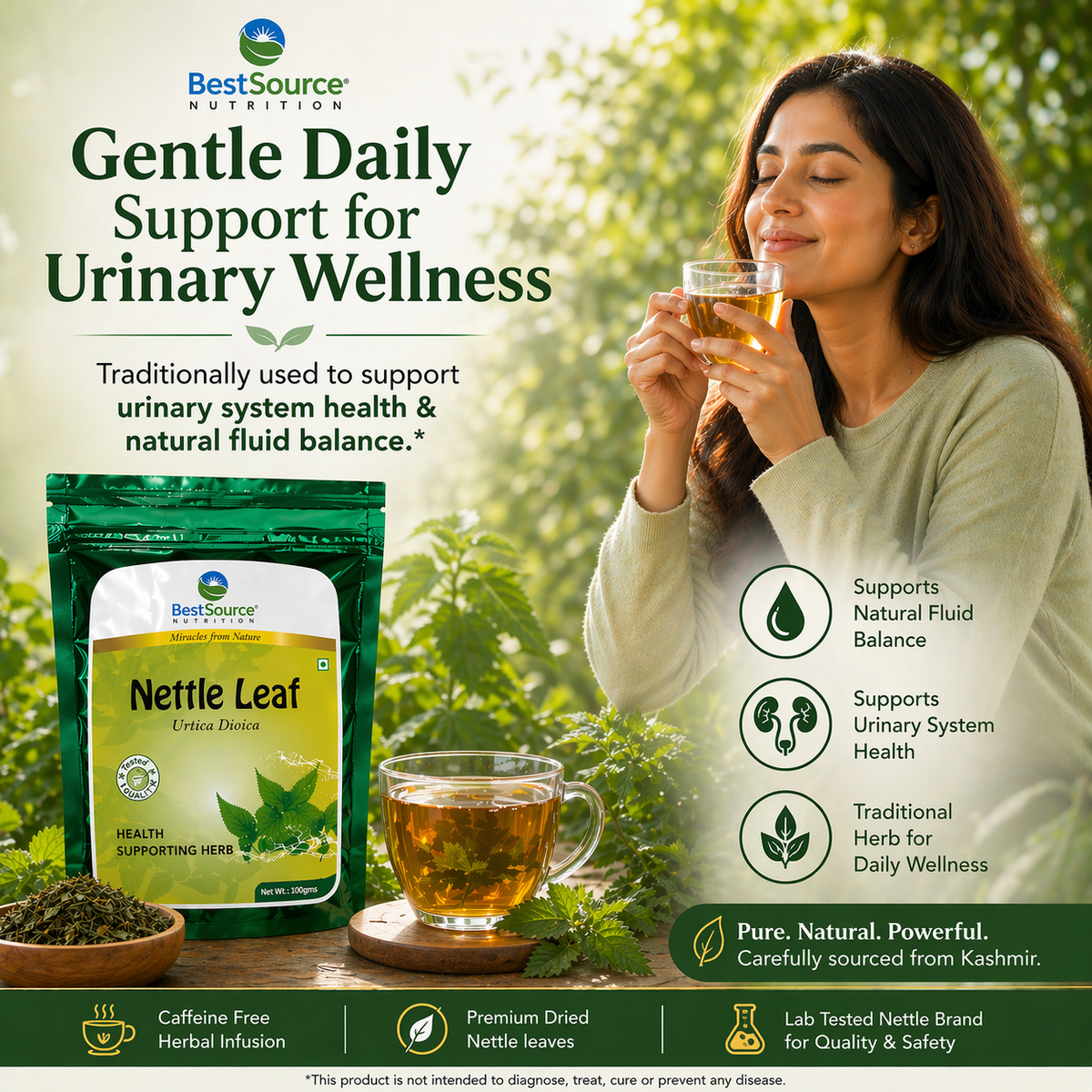
Daily Urinary Wellness

Nettle Leaf traditionally supports the normal functioning of the urinary system when combined with adequate hydration and a balanced diet.

Joint and Mobility Support

Naturally occurring plant compounds in Urtica dioica complement an active lifestyle and normal joint function.

Plant-Based Antioxidant Support

Stinging Nettle leaves contain natural phytonutrients that support the body’s normal antioxidant defences.

Infusion + Culinary Versatility

Whole dried Nettle Leaves can be prepared as a herbal infusion or added to suitable foods and recipes.

*This product is not intended to diagnose, treat, cure or prevent any disease.

  • Third-party tested for heavy metals
  • Potassium and sodium values are declared for informed product selection.
  • A long-established BestSource Nettle Leaf product cultivated in Kashmir.
  • Unblended *Urtica dioica* leaves with no added herbs or flavours.
  • Product-specific lab report available for customers to verify quality information.
  • 100 g dried Urtica dioica leaves.
  • Approx. 66 cups per 100 g pack—or 22 daily servings at 3 cups per day, as directed on the label.
Who Is It For
  • Adults building a daily herbal routine for normal urinary wellness.
  • Active and healthy-ageing adults focused on joint function and mobility.
  • People seeking a naturally caffeine-free alternative to regular beverages.
  • Natural-living consumers who prefer unblended, whole dried Nettle Leaves.
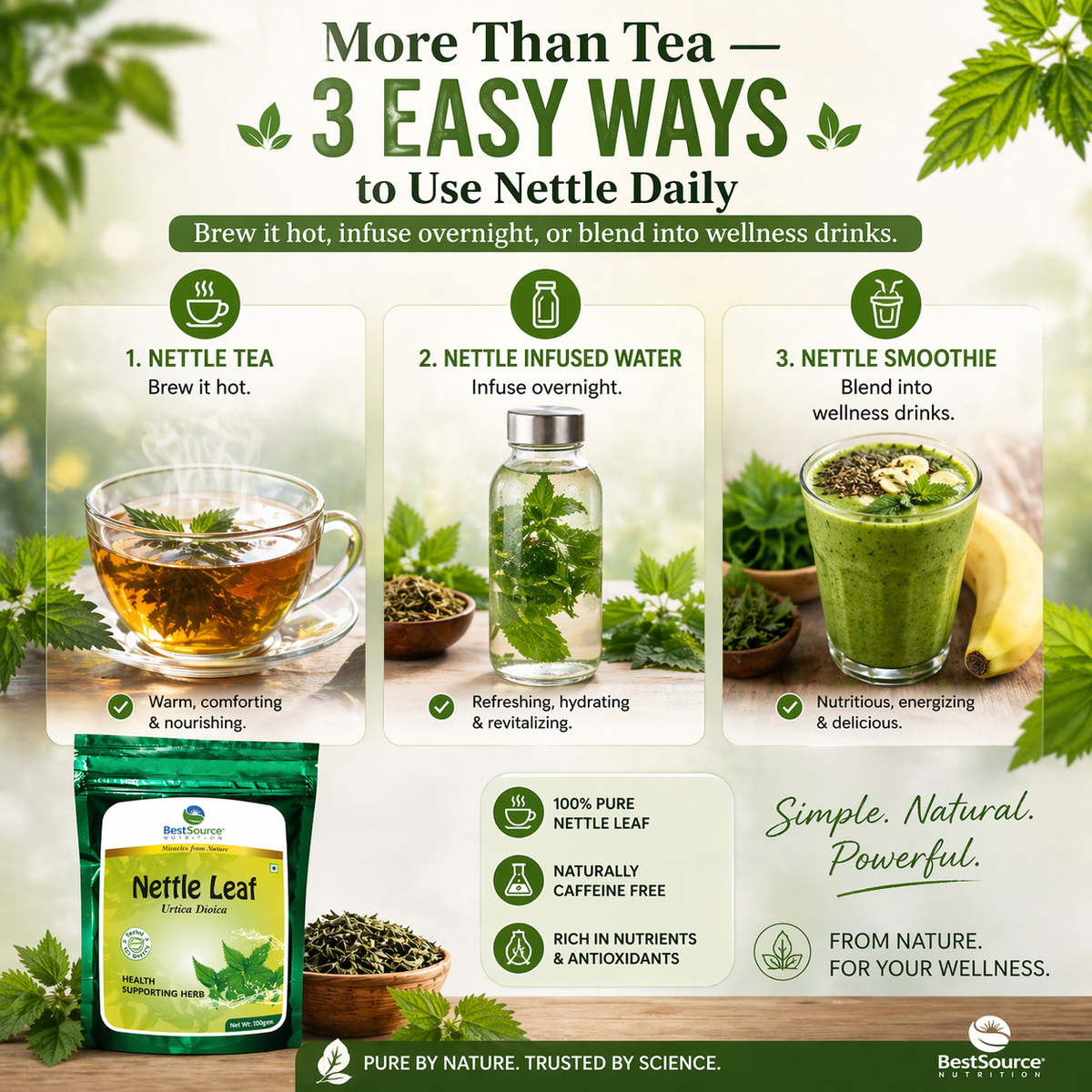
  • Add 1.5 g (1 teaspoon) of Nettle Leaf to water, boil for 2 minutes, strain and add honey if desired.
Parameters What BestSource Offers
  • Correct species and plant part Clearly identified *Urtica dioica* leaves cultivated in Kashmir—not nettle root
  • Single herb or mixed blend 100% unblended Nettle Leaf without added herbs or flavours
  • Contaminant testing Third-party tested for heavy metals, with a product-specific lab report available
  • Mineral transparency Potassium and sodium values disclosed for informed selection
  • Preparation and pack yield Clear 1.5 g-per-cup directions; approximately 66 cups from a 100 g pouch
  • No. Both come from Urtica dioica, but they are different plant parts with different compositions and uses. Nettle leaf is prepared as an infusion or food, while nettle root is commonly researched in men’s urinary formulations; they should not be treated as interchangeable.
  • Whole Nettle Leaf is the minimally processed dried herb used to prepare an infusion. An extract concentrates selected soluble compounds through a specific extraction process
  • Kashmir’s cool temperate climate, seasonal variation and characteristic mountain soils provide favourable growing conditions for Urtica dioica. Soil composition, altitude, rainfall and harvest timing can influence the leaf’s natural nutrient and plant-compound profile. Kashmir cultivation therefore adds sourcing relevance and traceability, while laboratory testing confirms the quality of the finished dried herb.
  • Dried herbs can vary according to soil and growing conditions. Third-party testing checks heavy-metal levels, while declared potassium and sodium values help consumers and healthcare professionals make a more informed choice; these tests confirm quality parameters, not product effectiveness.
  • Yes. Besides preparing a warm or cold infusion, the leaves can be incorporated into suitable soups, vegetable dishes, juices and other recipes.